
TOURISM AND RURAL DEVELOPMENT
Our goal in this area is to create conditions for the development of sustainable tourism and rural development. We contribute to enhancing the economic, social, and environmental resilience of the regions within the Banská Bystrica Region. We create and promote an attractive range of sustainable tourism products in tourism that are sought after by domestic and international visitors, as well as by the region’s residents.
Sustainable tourism development
Increase in the number of overnight stays in the region
Developing the regional economy
Job creation
Improving the quality of life of the region's inhabitants


OOCR MIDDLE SLOVAKIA

OOCR HOREHRONIE

OOCR REGION STIAVNICA

OOCR TOURISTIC NOVOHRAD AND PROMOTION
OOCR GRON

OOCR SLNEČNÝ HONT

OOCR GEMER
- Destination Management
- Destination Marketing
- Strategic and conceptual planning for sustainable tourism development in the region
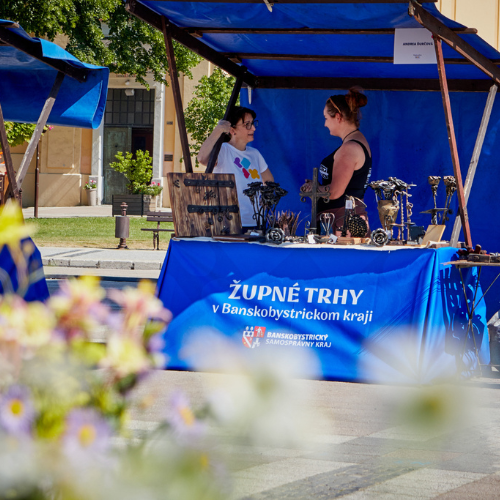
- Development of the project Regional counters - support for regional producers in the region
- Developing sustainable strategic tourism projects



Concept of development of natural tourism
in the Banská Bystrica Region by 2030
We care about the development of sustainable tourism in the Banská Bystrica region. We have become a member of the Association of Nature Tourism, and we have adopted the "Concept for the Development of Nature Tourism in the Banská Bystrica Region until 2030". It is the first concept of its kind in Slovakia and will be an excellent guide for our region on how to responsibly and sustainably develop the region through nature tourism.
This document is an output of our involvement in the international project "Less Barriers for More Benefits from Nature", implemented by the Aevis Foundation.
Experience trains
We ran unique rides on historical trains along the most beautiful railway lines in Slovakia, through unique technical monuments and national parks.
We connect the present with the stories of times past and bring visitors the opportunity to discover undiscovered places in the regions of the Banská Bystrica region with an unforgettable experience.
Experience trains are a great attraction during the summer season not only for the little ones but also for those born earlier.
Just get on the Horehronsky Express, the Miner's Express, the Robber's Express, the Express through 34 tunnels, or the Zubačka in Tisovec and the experience can begin!
Visegrad Fund
Digital reconstruction of cultural heritage (EN)
A digital reconstruction is used in the field of historical and cultural heritage to recreate, analyze, and visualize monuments. This project aims to preserve and interpret the culture and history of V4 countries. AR permits the simultaneous viewing of both virtual and real 3D data and a full immersion of the viewer. By involving the new technology, we will display past and present scenes together.
Pohron Castle Route
Get to know and discover with us the stories of ancient times. Discover the secrets of the castle walls that you may not have known about until now.
Discover the history-breathing corners of the manor houses or castles, breathe in the mysterious atmosphere of the castle ruins.
Uncover the past of the watchtowers hidden beneath the soil.
Go for unforgettable experiences, take the Pohron Castle Route.
Recovery and Resilience Plan - Projects
Revitalization of the historical Coburg Park in Pohorela Maša
The project deals with the complex revitalization of a precious historical park, which was built by the Coburgs in the first half of the 19th century in Pohorelská Maša - a local part of the village of Pohorelá. The project contributes primarily to the preservation of the cultural values of the landscape, but is also closely linked to the development of sustainable tourism.
The project will contribute to the preservation of the cultural and historical potential and aims to raise awareness of the history of the region through the revitalisation of these values, thus supporting local identity building and socio-economic development. The revitalisation of the park will allow its safe use by the general public and visitors, popularisation of cultural heritage and will also be part of the infrastructure for raising environmental awareness.
Sustainable development of cycling in the Muránska Planina National Park
The project is aimed at a comprehensive solution for the development of cycling tourism in the Muránska Planina National Park, as a particularly sensitive area in terms of biodiversity. Therefore, the subject of the project is not only the marking of new cycling routes and ensuring the high quality of existing cycling routes, but also the comprehensive setting of the development of cycling in accordance with the principles of sustainability.
This includes coordination of activities, development plans and cooperation, data collection, monitoring and above all pilot mapping of routes and sites as part of management. At the same time, the project plan works with the growing interest of the target group of cyclists in spending time in nature as an opportunity for raising awareness of nature and landscape conservation needs and responsible behaviour.

BBSK Development Agency, n. o.
Námestie SNP 14585/1A
97401 Banská Bystrica
info@dobrykraj.sk
+421 947 798 494

