

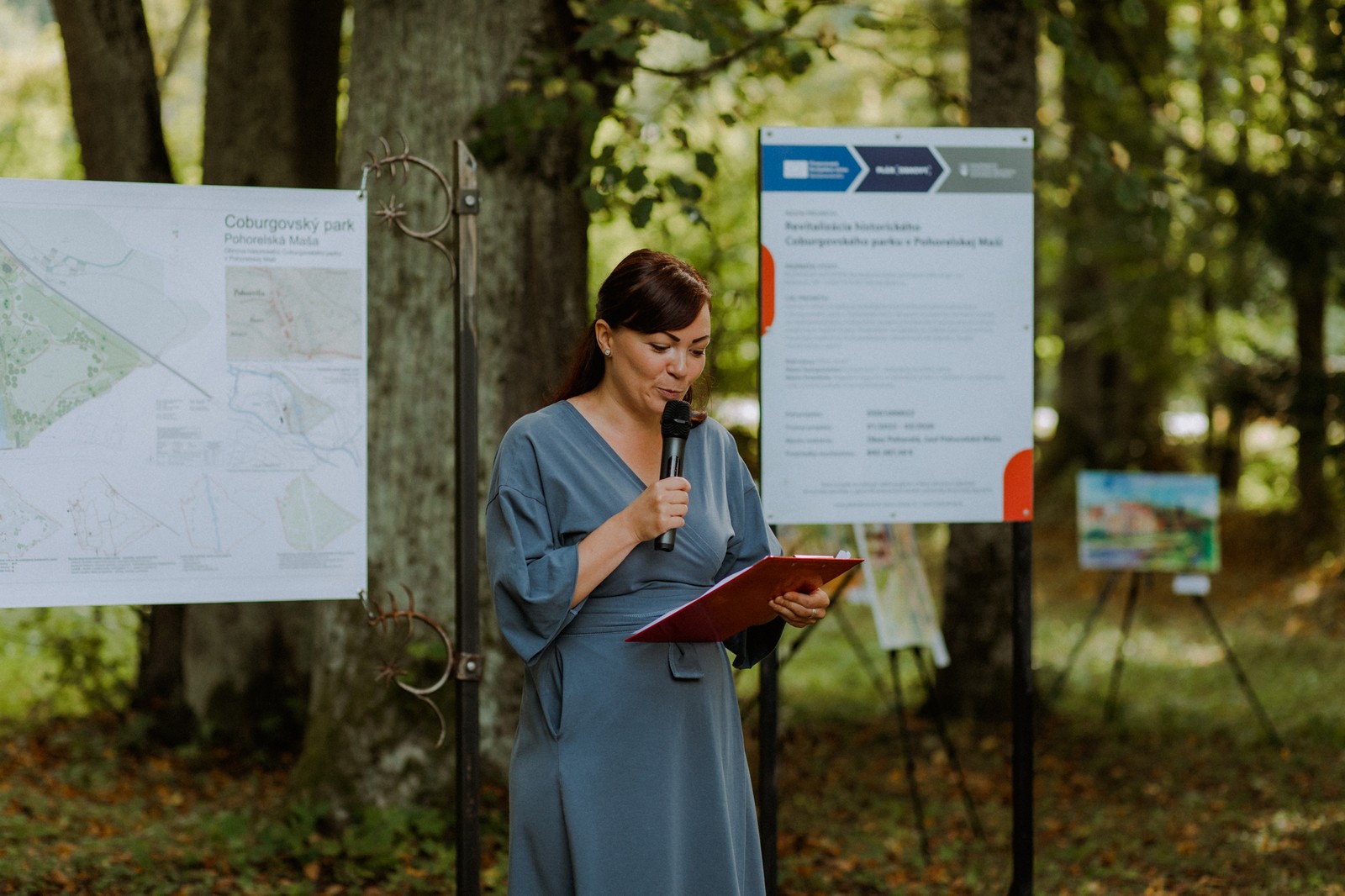
The influence of the Coburgs on the Horehronie region was significant and is still visible today. Thanks to their entrepreneurship, several settlements were established in the extravillas of the then Wallachian villages, which still exist today as independent villages or local parts of larger Horehronie villages. One of them is Pohorelská Maša, today a part of the village of Pohorelá. It was here that the former seat of this important aristocratic family and the centre of the entire Pohorel (Coburg) ironworks complex was located. The urban complex consisted of a manor house, the Roman Catholic Church of St. Philip and the ironworks headquarters building, the so-called Coburg Cure. The buildings were complemented by a rare English landscape park. The park was built after the construction of Coburg Manor in 1834-1835. The total area of the park is 6 hectares, which are divided by the railway line into two parts: the lower nature-landscape and the upper woodland park. The upper park forms a natural terrain backdrop to the lower park. The Bulgarian Tsar Ferdinand Coburg even had a private railway station built by the railway line, but it has not survived to this day.
Due to its size, the revitalisation of the park is divided into several stages. The first of them is planned to be implemented from the funds of the SR Recovery and Resilience Plan mechanism. The revitalisation in this phase will take place over an area of 3 hectares and will extend to the railway line.
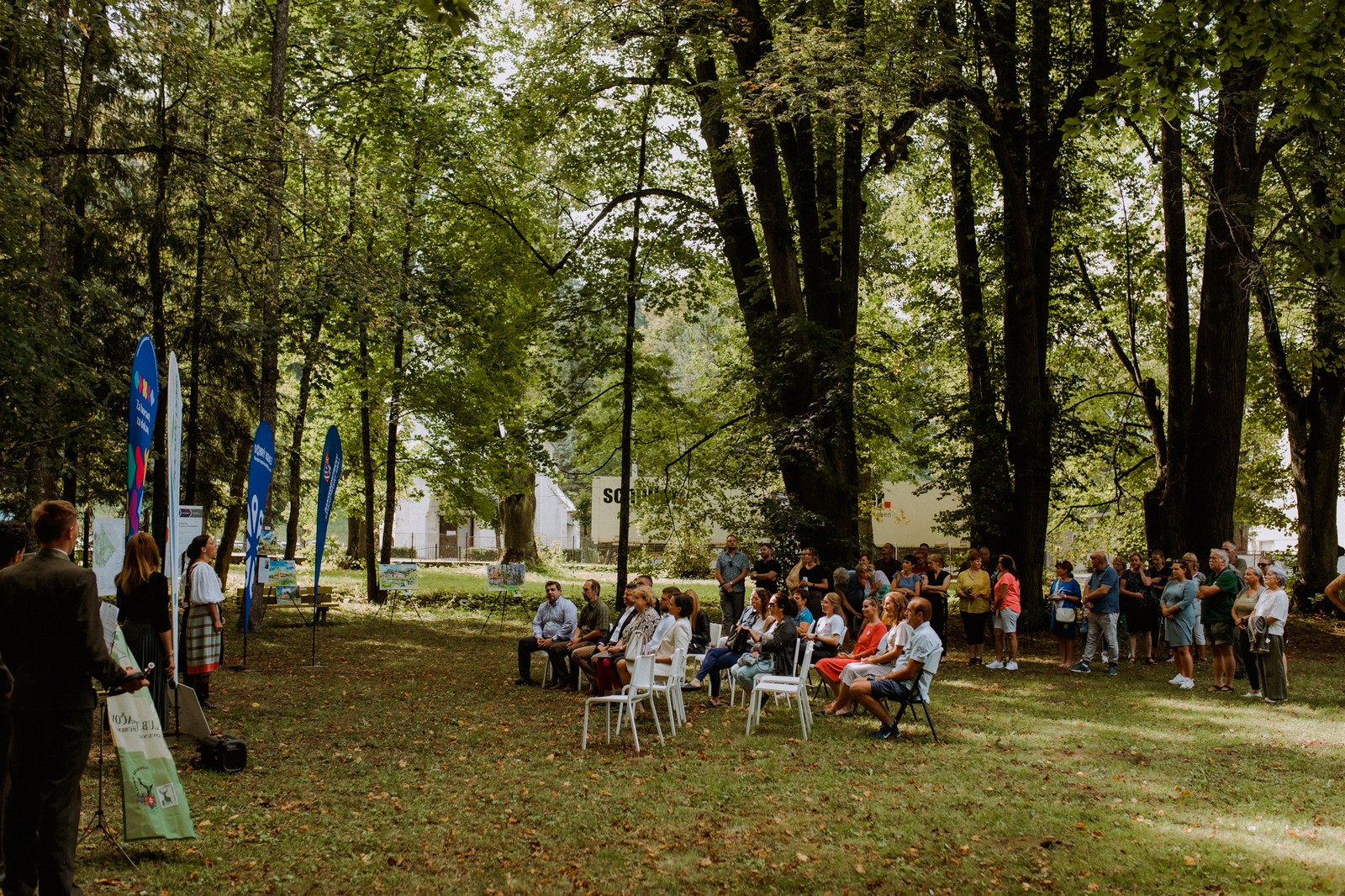
"The project documentation of the landscape-architectural design was procured and financed from the budget of the Banská Bystrica self-governing region last year. It includes a complex landscape-architectural design of the area, which includes a proposal for the reconstruction of the communication system, mobility, lighting, revitalization of the existing greenery, design of new planting and functional-operational solution of the park" said Jarmila Oceľová, project coordinator. She added: "in addition, the project also includes the design of a pedestrian bridge over the Hron River, the renovation of the existing bridge over the side water channel together with an additional supplementary footbridge, a garden pavilion for the needs of public events as well as a hinted reconstruction of the Coburg railway station with facilities for visitors to the park." The aim of the revitalisation of the park is to enhance its cultural, historical and natural value and to restore its functionality. Existing tree species, including native trees, are preserved as much as possible in the proposal and will be complemented by new plantings. The walkway is designed according to period maps and a new bridge over the river will connect the currently separated parts of the park.
The trails in the park will be thematic, referring not only to the natural values of the surrounding protected areas, but also to the important history of this place. For example, one of the circuits will be named after the important Czech painter Max Švabinský, who stayed in Pohorelská Maša during the summer months of 1931-1938. It was the beauty of the nature of Podkráľovohoľa that was the inspiration for his work.
"The revitalized park has the potential to present, in addition to the unique history associated with the Coburgs and the ironworks complex, the nature of two beautiful national parks, whose natural border, the Hron River, flows through its territory. The aim of the revitalisation is to preserve the natural values in connection with the unique history for future generations of our region. The project is closely related to the development of sustainable tourism, which is a source of employment creation," says Mikuláš Pál, Vice-Chairman of the Banská Bystrica Self-Governing Region.
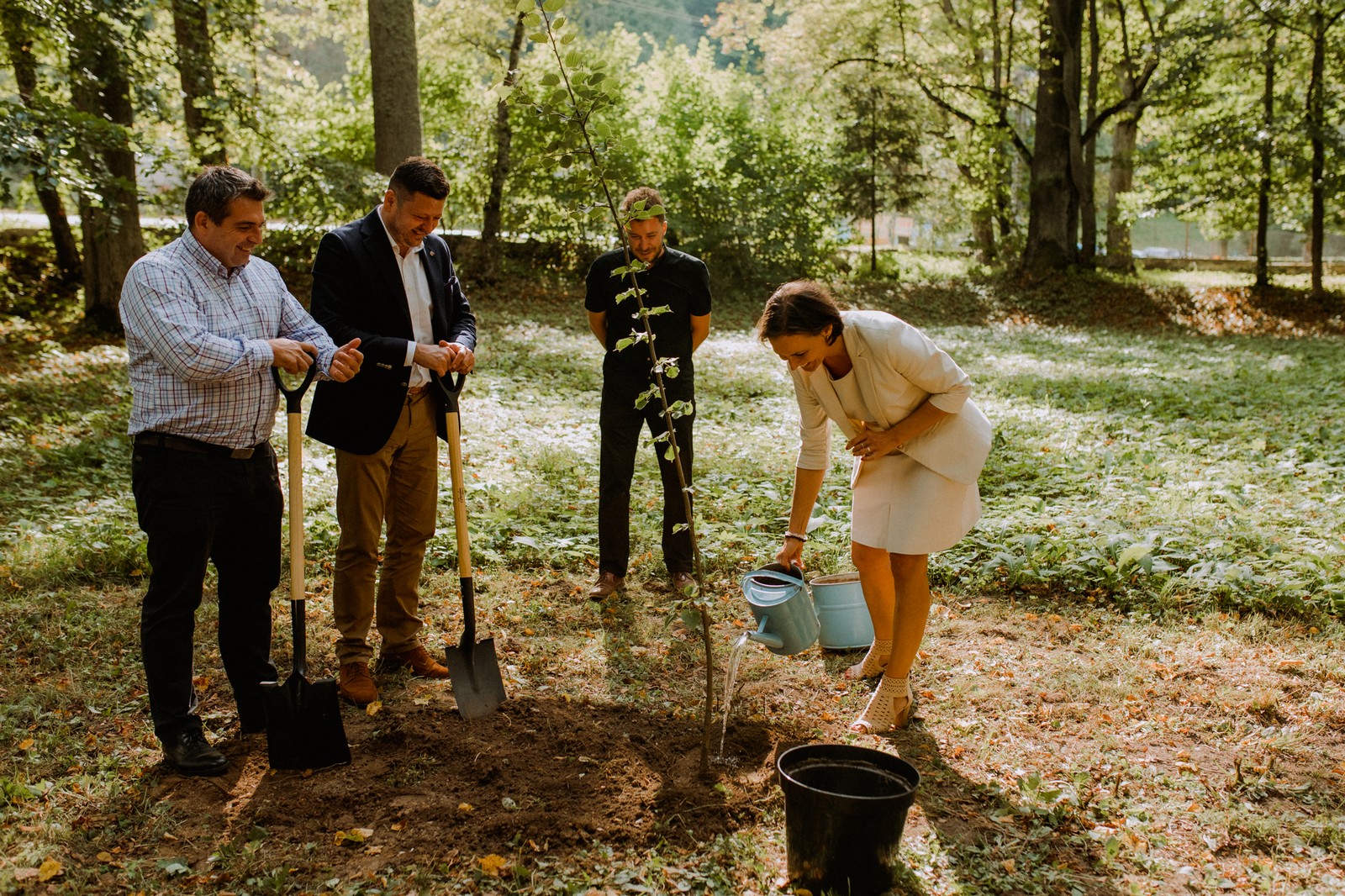
The very idea to restore the park, to build on the former glory of the Coburgs and the importance of the ironworks complex was born in 2019. Experts representing various key institutions were invited to the working group, including representatives of museums, the Monuments Office, national park authorities, tourism, municipalities led by the Pohorelá municipality, as well as representatives of the active local community. All of them joined together to launch a plan for revitalization of the park and preservation of the surrounding industrial heritage. The historical park has thus become an example of good cooperation in the Banská Bystrica region and in the Horehronie region itself, and as a sign of this cooperation, the first tree in the park was planted by representatives of the Banská Bystrica Self-Governing Region, the Development Agency of the BBSK and the Regional Tourism Organisation Región Horehronie.

In addition to the revitalisation of the park, a comprehensive project of a cultural route called the Coburg Iron Way is gradually being developed.
The route plans to connect industrial monuments in Horehronie, Gemery and Spiš with aristocratic residences of the Koháry and Coburg families, churches and cast-iron tombstones and other places connected with nature, hunting and symbolism related to these families. "This theme has a huge potential to connect Slovakia with abroad and with the countries where the Coburgs lived and worked in the times of their greatest glory. The cultural route can thus boost tourism in the future and increase the share of foreign visitors in the Horehronie region and the Banská Bystrica region," adds Janka Pálková, director of the BBSK Development Agency, which is a successful applicant for funding from the mechanism of the Slovak Republic's Recovery and Resilience Plan.
The completion of the project supported by the call of the Ministry of the Environment is set for March 2026, by which time all project milestones will have been completed, including the completed construction works.
